Complete guide on the Nigeria Police Corporal rank covering recruitment, salary structure, duties, promotion requirements, training, eligibility, and more. Stay informed with everything you need to build a career in the Nigeria Police Force.
Nigeria Police Corporal: Recruitment, Salary, Duties, Promotion and Full Career Guide

Nigeria police corporal requirements
To become a Nigeria Police Corporal, one must first join as a Constable, pass a series of exams and physical tests, and demonstrate good performance during service. The process is overseen by the Police Service Commission and Nigeria Police Force, and it involves written exams, physical tests, medical exams, and background checks. Promotion to higher ranks is based on years of service and work performance.
1. Recruitment Begins at the Constable Level:
The recruitment process for the Nigeria Police starts at the Constable level. This means that individuals wishing to become a Corporal or higher rank must first join the force as a Constable.
2. Promotion from Constable to Corporal:
To become a Corporal, a Constable must serve for a minimum period in the police force and rise through the ranks based on performance and years of service.
Essentially, becoming a Corporal is a result of proving yourself in the force, both through your work performance and time spent as a Constable.
3. Governing Laws:
The recruitment and promotion process for the Nigeria Police, especially for a Corporal, is governed by two important documents:
- The Nigeria Police Act: This is the legal framework that governs the overall functioning of the Nigeria Police Force, including recruitment and promotions.
- The Nigeria Police Regulations: These are the specific rules and procedures that guide how the Nigeria Police operates, including the recruitment process.
4. Recruitment Process:
The recruitment process is managed by:
Police Service Commission (PSC): This body is responsible for overseeing the recruitment and discipline of police officers in Nigeria.
Nigeria Police Force (NPF): This is the law enforcement body in Nigeria that collaborates with the PSC in recruiting and training police officers.
The steps involved in the recruitment process are:
Written Examination:
Applicants must pass a written exam that typically covers subjects such as:
English (to assess communication skills),
Mathematics (to assess logical thinking),
General Knowledge (to ensure that candidates are well-rounded and aware of current events and societal issues).
Physical Fitness Test:
Since being a police officer involves physical demands, candidates must pass a physical fitness test, which might include:
Endurance runs (running for a certain distance),
Push-ups (to assess upper body strength),
– Other fitness challenges that test a candidate’s stamina and physical capability.
Medical Examination:
Candidates must undergo a medical examination to ensure that they are physically fit to serve in the police force. This helps to ensure that they are in good health and have no medical conditions that could hinder their performance.
Background Check:
A background check is conducted to verify the candidate’s criminal record (if any). This ensures that only individuals with a clean record are eligible to serve in the police force.
5. Eligibility for Promotion:
Once someone has successfully completed the recruitment process and is inducted into the police force as a Constable, they must serve for a certain amount of time before being considered for promotion to the rank of Corporal.
Promotion to Corporal depends on years of service and performance. This means that simply waiting for a set amount of time may not be enough — an individual must demonstrate good work performance and dedication during their service to be eligible for promotion.
Salary
1. Salary Range for Police Corporal:
Basic Salary: The basic salary for a Police Corporal in Nigeria is estimated to be between ₦50,000 and ₦60,000 per month. This is the core salary paid to the officer before any additional allowances are added.
Total Monthly Take-Home: After adding allowances, the total monthly take-home for a Police Corporal is between ₦80,000 and ₦100,000. The exact figure within this range depends on factors such as experience, location, and additional benefits.
2. Allowances:
The allowances are additional payments on top of the basic salary and are meant to cover various aspects of the officer’s needs. These are:
Housing Allowance: This is provided to help police officers cover their housing needs, ensuring they have a place to live while serving. The allowance amount may vary depending on the officer’s location, as housing costs can be higher in cities like Lagos or Abuja.
Transport Allowance:- This allowance helps cover the costs of transportation. It is especially important for officers who have to travel frequently as part of their duties or live far from their assigned posts.
Risk Allowance: Police work can be dangerous, especially in certain areas or situations. The risk allowance is provided as compensation for the potential dangers officers face while on duty.
Uniform Maintenance Allowance: Since police officers are required to wear uniforms, the uniform maintenance allowance helps officers cover the costs associated with maintaining and replacing their uniforms.
3. Salary Determination: The salary structure is determined by the Federal Government of Nigeria through a framework called the Consolidated Police Salary Structure (CONPOSS). This structure standardizes the pay for all members of the police force in Nigeria, ensuring fairness and transparency.
4. Impact of Experience and Location:
The total salary varies based on experience and location. For instance, more experienced officers may earn at the higher end of the salary range, while those with less experience may earn closer to the lower end.
– The location also plays a role in determining how much an officer earns. Officers posted to more urbanized or expensive areas (like Lagos or Abuja) might receive higher allowances due to the higher cost of living.
Nigeria police corporal duties and responsibilities
1. General Police Duties (As per Section 4 of the Police Act):
The Act specifies general police duties which apply to all police officers, and these are the foundation for a Corporal’s responsibilities as well. These general duties include:
Protection of Life and Property: One of the core roles of the police is to protect citizens’ lives and properties, ensuring the safety of the public from any form of threat, including criminal activities or dangerous situations.
Detection and Prevention of Crime: Police officers, including Corporals, are responsible for detecting crimes (investigating and identifying criminals) and preventing crime from occurring through proactive policing methods (e.g., patrols, community engagement).
– Enforcement of Laws and Regulations: Police officers ensure that citizens comply with the laws and regulations in the country. This includes enforcing laws related to crime, public order, traffic, and other societal rules.
2. Corporal’s Duties (Specific to Corporal Role):
As a Police Corporal, the individual has more responsibility and is involved in more supervisory roles compared to Constables. These duties are outlined as follows:
General Policing:
Crime Prevention: Corporals are involved in preventing crimes through constant surveillance, community engagement, and addressing potential threats.
Arrest of Suspects: Corporals also have the responsibility to arrest individuals who are suspected of committing crimes, as per the law.
Maintaining Public Order: Corporals ensure that public events or everyday public behavior remains orderly and that any disturbances (e.g., riots, protests) are addressed effectively.
Supervisory Role:
A Corporal leads and supervises Constables, guiding them in patrol duties, investigations, and day-to-day police station activities. This supervisory role is crucial in maintaining discipline and order within the police force.
– Corporals ensure that Constables are effectively performing their duties, report to higher-ranking officers, and assist with troubleshooting any issues that may arise during policing duties.
Administrative Tasks:
Maintaining Police Records: A Corporal may be tasked with ensuring that police records are up-to-date, well-organized, and accurately maintained. This includes maintaining files on arrests, investigations, and other important administrative functions.
Assisting in Charge Room Duties: Corporals often help with duties in the charge room, where suspects are brought in and processed. This includes filling out paperwork, recording statements, and taking custody of evidence.
Escorting Detainees: Corporals may be responsible for safely escorting detained individuals to court or other holding facilities. This ensures the safety of detainees and prevents them from escaping.
Traffic Control:
A Corporal may be assigned to enforce traffic laws by regulating traffic flow, ensuring road safety, and issuing tickets for violations. This duty can be particularly important in busy urban areas where traffic management is a critical concern.
Nigeria Promotion to Corporal in the Nigerian Police Force:
In the Nigerian Police Force, Corporal is indeed the third-lowest rank within the police hierarchy, as outlined in the rank structure. Here’s a detailed breakdown of how the promotion to Corporal occurs, as well as the processes and requirements involved.
Hierarchy of Police Ranks:
1. Constable: The entry-level rank for new recruits.
2. Lance Corporal: The next rank after Constable, usually granted after demonstrating some level of experience and competency.
3. Corporal: The third-lowest rank, which is reached after further advancement from Lance Corporal.
Promotion to Corporal:
Promotion to the rank of Corporal is governed by Regulation 167 of the Nigeria Police Regulations. This regulation outlines the requirements and processes for an officer to be promoted from Constable (or Lance Corporal) to Corporal.
Requirements for Promotion to Corporal:
1. Minimum Service Duration:
An officer must have served a minimum of 5 years as a Constable before being eligible for promotion to Corporal.
– Alternatively, an officer can be eligible for accelerated promotion to Corporal after 2 years of service, provided they meet additional educational qualification requirements (such as possessing certain academic certificates or completing relevant courses).
2. Good Conduct and Disciplinary Record:
Promotion is contingent upon an officer having good conduct during their service. Officers with a clean record, free from disciplinary infractions, will be considered for promotion.
Any significant disciplinary issues or criminal behavior will disqualify an officer from promotion to Corporal.
3. Passing Promotion Exams/Interviews:
Officers who meet the minimum service period and have good conduct must pass promotion exams and interviews. These exams usually cover both theoretical and practical knowledge related to policing, law enforcement, and police duties.
The interviews assess the officer’s ability to handle responsibilities and leadership qualities that are necessary for the role of a Corporal.
Promotion Process:
1. Recommendation by the Rank and File Interview Board:
– After fulfilling the requirements, officers are recommended for promotion by the Rank and File Interview Board. This board typically consists of senior officers who assess the candidates based on their performance, conduct, and other relevant factors.
The board plays a key role in evaluating whether an officer is fit for promotion based on merit.
2. Approval by the Police Service Commission (PSC):
After the Rank and File Interview Board recommends an officer for promotion, the Police Service Commission (PSC) must approve the promotion.
The PSC is responsible for overseeing the recruitment, promotion, and general welfare of officers in the Nigerian Police Force. They ensure that promotions are fair, merit-based, and comply with the regulations.
How Promotion Process to Corporal in the Nigeria Police
The path to becoming a Corporal in the Nigerian Police Force is strictly through internal promotion. There is no direct recruitment into the rank of Corporal. The process is structured and guided by the Nigeria Police Act and the Nigeria Police Regulations, especially Regulation 167.
Step-by-Step Breakdown:
Step 1: Enlist as a Police Constable
This is the entry-level rank in the Nigerian Police.
- To be recruited, candidates must meet certain criteria:
- Nigerian citizenship
- Educational qualifications (minimum of SSCE/WAEC)
- Physical and mental fitness
- Clean background check
Step 2: Complete Police Training
– New recruits undergo formal training at a recognized Police College or Training School.
- Training includes:
- Police duties and ethics
- Use of force and firearms
- Physical fitness training
- Law enforcement techniques
Step 3: Serve the Minimum Required Years
A Police Constable must serve for:
Minimum of 5 years under normal progression
Or 2 years under accelerated promotion, if the officer has higher educational qualifications or shows exceptional performance
Step 4: Pass Evaluations and Promotion Exams
Before promotion:
- Officers are evaluated on conduct, performance, and disciplinary record
- Must sit for and pass a promotion examination
- May be interviewed by the Rank and File Interview Board
Requirements for entry level
Entry-Level Requirements – Police Constable
To be recruited as a Police Constable, which is the starting rank, an applicant must meet the following baseline qualifications as per the Nigeria Police Act and Nigeria Police Recruitment Guidelines:
Basic Requirements:
- Nationality: Must be a Nigerian citizen by birth.
- Age: Between 18 and 25 years at the time of application.
- Educational Qualification:
- Minimum: First School Leaving Certificate (FSLC) or
- Senior Secondary School Certificate (WAEC/NECO) with credit passes in core subjects.
Character:
Must be of good behavior and clean criminal record.
Physical Fitness:
Height:
1.67 meters for males
1.62 meters for females
Chest measurement (for males): Minimum of 86 cm (expanded)
Medical Fitness:
Must be physically and mentally sound
Free from deformities, contagious diseases, and chronic illnesses
Requirements for Promotion to Corporal
After entering as a Constable and serving diligently, promotion to Corporal requires the following:
Service & Performance:
Must have served for a minimum of 5 years as a Constable.
Or 2 years if eligible for accelerated promotion (based on higher qualifications or excellence).
Excellent performance record and no disciplinary issues.
Educational and Skill-Based Assessment:
Candidates must pass promotion exams (including written tests and oral interviews).
Officers with higher education (e.g., O’Level/SSCE with credits) may move faster up the ranks.
Final Approval:
– Recommendation by internal review boards (e.g., Rank and File Interview Board)
– Promotion is approved by the Police Service Commission (PSC).
Police corporal Training
Police Training Overview (Constable to Corporal Level)
Training is mandatory for all recruits and is carried out in Police Colleges across Nigeria, such as:
Police College, Ikeja (Lagos)
Police College, Kaduna
Others in Maiduguri, Oji River, and Kano
Training Phases & Focus:
For Constables (Entry-Level):
Initial 6-month training focused on:
Basic policing
Discipline and physical fitness
Law and order maintenance
Use of arms and self-defense
For Corporals (Mid-Level Rank):
As an officer rises to Corporal, training becomes more advanced and tailored toward leadership and operational skills. At this level:
Training Duration:
Typically 6 months
Conducted at designated Police Colleges
Core Areas of Training Include:
1. Leadership & Supervision:
Preparing to lead patrol teams and supervise constables.
Understanding responsibilities as a first-line supervisor.
2. Drill & Combat Training:
Physical conditioning
Tactical formations
Crowd control techniques
3. Firearms Handling:
Safe handling of service weapons
Marksmanship and shooting range exercises
Use-of-force protocols
4. Criminal Law & Investigations:
Nigerian criminal code and penal laws
Basics of investigation techniques
Handling of evidence and arrest procedures
5. Human Rights & Community Policing:
Understanding citizens’ rights
Promoting civil-police relations
Ethics and anti-corruption awareness
Police corporate Job description
Here’s a full explanation and breakdown of the duties and responsibilities of a Police Corporal in Nigeria, based on your outline:
Duties of a Police Corporal in Nigeria
A Police Corporal serves as a mid-level officer in the Nigeria Police Force and holds supervisory responsibilities over lower-ranking officers, particularly Constables and Lance Corporals.
Key Responsibilities:
1. Supervisory Role:
Leads a small team of Constables during patrols, investigations, and law enforcement operations.
Ensures that junior officers follow orders, adhere to protocols, and maintain discipline.
Acts as a link between junior officers and higher-ranking supervisors like Sergeants or Inspectors.
2. Operational Duties:
Patrolling assigned areas to maintain public order and deter crime.
Making arrests and conducting searches in line with legal procedures.
Executing orders related to investigations, surveillance, or raids.
Participating in special operations such as anti-robbery missions or community policing.
3. Administrative Work:
Writing incident and daily activity reports.
Keeping station diaries and charge books.
Assisting in charge room duties, which include taking complaints, managing suspects in custody, and updating files.
4. Judicial and Legal Support:
Testifying in court as a prosecution witness during trials.
Wssisting in the collection and preservation of evidence.
5. Public Order Duties:
Crowd control during protests, rallies, or public events.
Traffic enforcement, ensuring road safety and managing congestion.
Responding to emergencies such as accidents, theft, or violence.
Police corporal Eligibility
Eligibility Criteria
To be considered for promotion from Constable to Corporal, the officer must:
Be a serving Constable officially enlisted in the Nigeria Police Force.
Have completed the required minimum years of service, typically 5 years, though accelerated promotion may apply for those with higher educational qualifications and exemplary service.
Maintain a clean disciplinary record with no history of misconduct or pending investigations.
Exhibit good character, dedication to duty, and respect for law and order.
Promotion Process:
The transition from Constable to Corporal involves:
1. Internal Assessment:
Conducted by senior officers through service record evaluation and performance reports.
2. Promotion Examination:
Includes written tests in areas such as:
English and General Knowledge
Police Duties and Ethics
Nigerian Constitution and Police Act
3. Recommendation by Supervisors:
Based on behavior, leadership qualities, and overall performance.
4. Approval:
Final approval is given by the Police Service Commission (PSC) upon successful completion of all requirements.
Age Requirements: Constable Recruitment & Promotion to Corporal
In the Nigeria Police Force (NPF), entry and advancement are structured through clearly defined criteria under the Police Act and Police Regulations. One such criterion is age eligibility, particularly at the entry level.
At Entry Level – Police Constable:
Candidates applying for recruitment as a Police Constable must be:
Between 18 and 25 years old at the time of application.
This ensures physical fitness, adaptability, and long-term service potential.
Promotion to Corporal:
There is no fixed age limit for promotion to the rank of Corporal, as it is an internal advancement based on:
Years of service (usually a minimum of 5 years as a Constable).
Performance assessments and promotion examinations.
By the time an officer qualifies for Corporal, they are typically in their mid-to-late 20s or early 30s, depending on the age at recruitment and promotion speed.
Physical Fitness Requirements: Recruitment & Corporal Promotion
Physical fitness is a critical component of recruitment into the Nigeria Police Force (NPF), ensuring that all candidates possess the strength, agility, and stamina required for active duty. These standards are assessed during the initial recruitment process and are expected to be maintained throughout an officer’s career.
At Recruitment (Constable Level):
Applicants undergo a series of fitness evaluations designed to test their overall physical condition. These include:
100 Metres Sprint: Must be completed in under 15 seconds.
Endurance Run: 1.6 km to 3 km jog, typically completed within 15 minutes.
Push-ups: Minimum of 30 repetitions in 2 minutes.
Sit-ups: To assess core strength and stamina.
Medical Examination: Includes general health, vision test, and screening for physical deformities or chronic conditions.
At Promotion to Corporal:
While there is no formal fitness re-test for promotion to Corporal, officers are expected to maintain:
A reasonable level of fitness.
Operational readiness for field assignments, patrols, and emergency response.
Additional fitness assessments may be required for special units or deployments.
The emphasis on physical capability ensures that all officers are not only mentally prepared but also physically able to carry out the demanding tasks required in law enforcement.
Carrier progress Nigeria Police Corporal Career Progression
A Police Corporal in the Nigeria Police Force (NPF) holds a critical middle-enlisted rank, providing supervisory support and operational oversight. Career advancement from this position follows a well-structured hierarchy and is based on years of service, conduct, leadership skills, and educational qualifications.
Typical Rank Progression Path:
1. Police Constable
2. Lance Corporal
3. Corporal
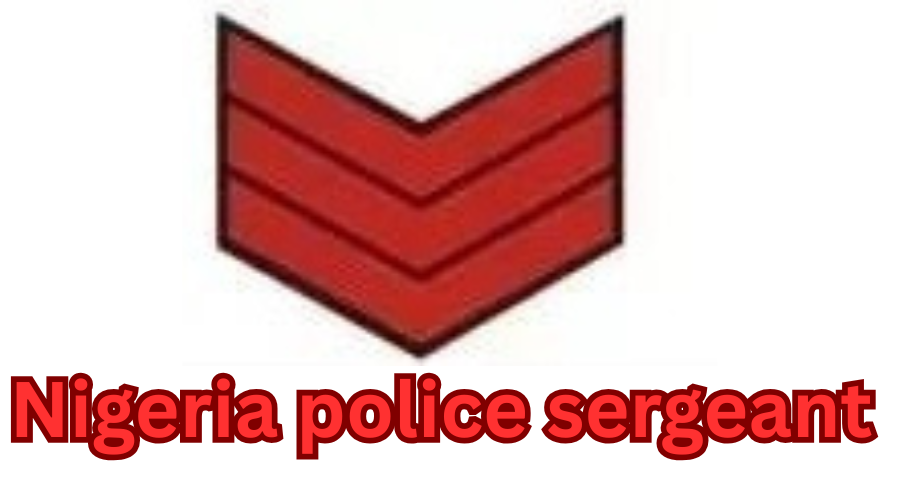
4. Sergeant
5. Inspector
Post-Corporal Advancement:
– Promotion to Sergeant generally requires 3–5 years of meritorious service as a Corporal.
Further advancement includes:
Inspector of Police (IP)
Assistant Superintendent of Police (ASP)
Deputy Superintendent of Police (DSP)
Superintendent of Police (SP)
Chief Superintendent of Police (CSP)
And eventually to the Commissioned Officer ranks.
Pathway to Higher Ranks:
Officers demonstrating exceptional leadership, discipline, and academic qualifications may be fast-tracked through accelerated promotions.
Career development courses and assessments are essential for ascending to senior officer levels.
This progression structure ensures a merit-based system that rewards performance, integrity, and commitment to public service.
Nigeria Police Corporal Benefits
A Police Corporal in the Nigeria Police Force enjoys a range of benefits designed to support their well-being, career growth, and retirement. These benefits ensure that officers are adequately supported in both their professional and personal lives.
Key Benefits for Nigeria Police Corporal:
1. Monthly Salary and Allowances
A Corporal receives a competitive salary, which includes various allowances based on their rank, location, and service length. The total monthly take-home pay ranges between ₦80,000 and ₦100,000, factoring in housing, transport, risk, and uniform maintenance allowances.
2. Health Insurance (National Health Insurance Scheme – NHIS)
All officers, including Corporals, are entitled to comprehensive healthcare coverage under the NHIS, which ensures medical attention for themselves and their immediate families.
3. Pension and Gratuity
Upon retirement, officers are entitled to a pension scheme under the Pension Reform Act, which is managed by the Pension Commission of Nigeria (PENCOM). This provides financial security for retired officers after they have completed their service.
4. Free Uniforms and Weapons Training
Corporals receive free uniforms as part of their standard issue, which are regularly updated. Additionally, training on weapons handling is provided, ensuring that officers are well-prepared for their duties.
5. Housing Support
In some states and police divisions, there is housing support, where officers may be provided with accommodation or offered housing allowances to meet their residential needs.
6. Leave Bonuses and Hazard Allowance
Police Corporals are entitled to annual leave bonuses to facilitate their rest and rejuvenation. They are also provided with hazard allowances due to the risks associated with their law enforcement roles.
7. Promotion Opportunities
A Corporal has the opportunity to advance to higher ranks, such as Sergeant and beyond, based on performance, experience, and qualifications. Promotions come with salary increments, career advancement, and greater responsibilities.
Additional Benefits:
Transport Allowance: Police Corporals in certain locations may receive additional transport allowances to support their daily commute.
Operational and Duty Support: Depending on the location, there may be provision of field equipment, specialized training, and allowances for high-risk assignments or operations.
This well-rounded benefits package ensures that police officers in Nigeria are equipped with the necessary resources, career development opportunities, and financial security both during and after their service.
Nigeria Police Corporal Medical Test
The medical test is a crucial part of the recruitment process for individuals wishing to join the Nigeria Police Force as Constables. While subsequent promotions, such as the advancement to Corporal, do not require re-testing, medical fitness remains an essential consideration for all police officers, particularly as they continue with fieldwork and high-stakes assignments.
Key Components of the Nigeria Police Corporal Medical Test:
1. Eye Test
A vision test is conducted to ensure that candidates do not have severe vision impairments. Good eyesight is critical for the police, as it enables officers to detect suspicious activities and safely operate firearms.
Requirement: No significant vision issues that could hinder an officer’s performance in their duties.
2. HIV/AIDS & Hepatitis Screening
All recruits and officers are screened for HIV/AIDS and Hepatitis. These screenings ensure that individuals with serious communicable diseases are identified. Officers must be healthy enough to perform their duties without putting themselves or their colleagues at risk.
Note: While a positive result may disqualify a candidate for recruitment, continuous medical monitoring throughout the officer’s career is essential, especially in high-risk environments.
3. General Physical Fitness
During the recruitment process, candidates must pass a general physical fitness test, which includes tasks such as running, push-ups, and sit-ups to assess endurance, strength, and overall health.
Requirement: Candidates should not have physical deformities or chronic illnesses that could impede their ability to perform physically demanding tasks such as patrolling, making arrests, or engaging in combat situations.
Medical Fitness for Corporals:
While the initial medical test is mandatory at recruitment, the medical fitness of a Corporal is constantly implied and necessary for field operations. Police officers, especially at higher levels, are often deployed in demanding environments, and physical and mental health plays a critical role in ensuring effectiveness and safety.
While medical re-testing is not typically required for promotions to Corporal, physical fitness is an ongoing requirement for operational readiness. In some cases, particularly for special deployments or field assignments, officers may undergo further medical assessments.
Fitness in the Field: It is expected that Corporals remain in good physical condition to lead teams on patrol, conduct arrests, and take part in potentially dangerous operations.
Nigeria Police Corporal Exam
The promotion from Constable to Corporal in the Nigeria Police Force (NPF) involves an internal examination process that assesses the candidate’s proficiency in various areas critical to law enforcement duties. The exam consists of both written and oral components designed to test knowledge, decision-making skills, and the ability to perform effectively as a leader and supervisor of Constables.
Key Aspects of the Nigeria Police Corporal Exam:
1. Written Examination
The written exam covers several fundamental topics that are vital for police officers at the Corporal rank. These subjects are designed to evaluate both practical knowledge and theoretical understanding of law enforcement duties.
Subjects Covered in the Written Exam:
English: The exam will assess communication skills—writing and comprehension which are critical for report writing, effective communication with colleagues, and testifying in court.
Mathematics: Basic mathematical knowledge is tested, particularly for tasks that involve calculations, such as calculating evidence, distances during patrols, or interpreting data.
Current Affairs: This section assesses the officer’s awareness of local, national, and global events. Being updated on current affairs is essential for making informed decisions during law enforcement operations.
Basic Law Enforcement Knowledge: This includes police laws, procedures, and best practices that officers need to be familiar with to carry out their duties effectively. It also covers issues like criminal procedure, rights of detainees, and evidence handling.
2. Oral Examination
The oral exam tests the candidate’s interpersonal communication skills and leadership potential. As a Corporal, the individual will be tasked with supervising Constables and making critical decisions on the field. The oral examination allows the panel to assess the candidate’s confidence, leadership style, and ability to communicate effectively under pressure.
Key Topics in the Nigeria Police Corporal Exam:
Police Law and Procedures:
This section evaluates knowledge of criminal laws, investigation procedures, search and arrest protocols, and the police code of conduct. Corporals are expected to ensure that their subordinates are adhering to these protocols while performing their duties.
Use of Force:
Corporals must understand when and how to use force appropriately, including the minimum force necessary to subdue suspects while ensuring compliance with human rights standards.
Report Writing:
Officers must be adept at writing detailed and accurate reports, which are critical for documentation, legal proceedings, and internal police assessments. The exam will test the candidate’s ability to document incidents, prepare statements, and summarize cases clearly.
Basic Leadership:
Since the Corporal role requires leadership responsibilities over Constables, the exam evaluates leadership skills. This includes decision-making, team management, and the ability to maintain discipline and motivate subordinates.
Promotion Exam Process:
The promotion exam is a competitive internal process and is usually conducted annually or as vacancies arise. Corporals are chosen from a pool of Lance Corporals who meet the required years of service and good conduct.
Assessment Panel: The exam is overseen by an evaluation committee comprising senior police officers and officials from the Police Service Commission (PSC).
Outcome: Successful candidates who pass both the written and oral exams are then promoted to the Corporal rank.
Nigeria Police Corporal Vacancies
In the Nigeria Police Force (NPF), Corporal positions are typically not filled through direct external recruitment. Instead, Corporal roles are filled through internal promotions from the Constable or Lance Corporal ranks, meaning that candidates are required to have already served as a Constable or Lance Corporal before being considered for promotion to the Corporal rank.
Promotion-Based System:
Corporal Vacancies: These positions are not publicly advertised for external applicants. Instead, they are available internally within the police force. Officers who have served for a minimum period as Constables or Lance Corporals and have met the eligibility criteria are promoted to Corporal based on merit, seniority, and performance.
Internal Promotions: Promotions are based on seniority and the successful completion of promotion exams and internal assessments. Corporals are expected to have demonstrated proficiency in police duties, leadership abilities, and compliance with the Police Act.
Recruitment of Constables:
While Corporal vacancies are filled internally, the Nigeria Police Force (NPF) regularly conducts external recruitment for Constables. These recruitment processes are announced publicly, and interested individuals can apply to join as Constables—the entry-level position in the NPF. After successful completion of training and service, Constables can be promoted to higher ranks such as Lance Corporal and eventually Corporal.
External Recruitment: Constable recruitment is typically announced annually through multiple channels, such as:
Police Recruitment Portal: The official portal where candidates can apply for Constable positions.
NPF Website: The official Nigeria Police Force website also publishes updates on recruitment processes and guidelines.
Promotion Process for Corporals:
To be promoted from Lance Corporal to Corporal, the following steps are generally followed:
1. Eligibility: The individual must have served a specific number of years as a Lance Corporal or Constable.
2. Promotion Exams: Candidates must pass both written exams and oral evaluations to qualify for promotion.
3. Recommendation: Recommendations are made by a Rank and File Interview Board and subsequently approved by the Police Service Commission (PSC).
4. Good Conduct: The individual must maintain a clean service record and adhere to the police code of conduct.
Nigeria Police Corporal Promotion Requirements
Becoming a Corporal in the Nigeria Police Force requires meeting both qualitative and quantitative criteria. It involves completing the required service years, maintaining a good record of performance, having no disciplinary issues, passing promotion exams, and receiving recommendations from superiors. This structured process ensures that only competent and reliable officers ascend to higher ranks in the police force, promoting professionalism and dedication within the service.
Promotion to the Corporal rank in the Nigeria Police Force (NPF) follows a structured process based on years of service, performance, and successful completion of exams. Below are the key requirements and steps to be promoted to Corporal:
Minimum Service Period
General Service Requirement: To be eligible for promotion to Corporal, a Constable or Lance Corporal must have served for a minimum period of 3 years. However, individuals with higher qualifications (such as a secondary school certificate or other qualifications) may be eligible for accelerated promotion, requiring only 2 years of service before being considered for promotion.
Performance Record
Excellence in Performance: To qualify for promotion, an individual must have demonstrated excellent performance in their duties. This includes effectively carrying out patrol duties, crime prevention, arresting suspects, and maintaining public order.
Performance Evaluation: The individual’s work ethic, efficiency, leadership capabilities (especially when leading Constables), and overall contributions to the police force are assessed.
Disciplinary Record
Clean Record: A clean disciplinary record is critical for promotion to Corporal. Officers with any major infractions, disciplinary issues, or misconduct during their service period may be disqualified from promotion.
No Criminal Activity: Candidates for promotion must also be free from any criminal activities or legal violations. Any ongoing investigations or criminal charges could delay or nullify the promotion process.
Completion of Internal Exams
Promotion Exams: To be considered for promotion to Corporal, Constables or Lance Corporals must pass the promotion exams conducted by the Nigeria Police Force (NPF).
Written Exam: The written exam usually covers subjects such as police law, basic policing procedures, criminal law, report writing, and leadership skills.
Oral Interviews: In addition to written exams, there may also be oral interviews or assessments to evaluate the candidate’s leadership abilities and knowledge of police operations.
Recommendation from Superior Officers
Recommendation: Promotion to the Corporal rank is usually initiated based on recommendations from superior officers, such as Sergeants, Inspectors, or other senior officers. Their assessment of the candidate’s leadership skills, dedication, and contribution to the force plays a major role in the promotion process.
Board Approval: The recommendations, along with performance evaluations and exam results, are reviewed by the Rank and File Interview Board. The Police Service Commission (PSC) then makes the final decision on the promotion.
Nigeria Police Corporal Entry Exam Results
In the Nigeria Police Force (NPF), the results of the promotion exams for the Corporal rank are handled in a specific, non-public manner. Here’s an overview of how the exam results are communicated and processed:
1. Non-Public Results
Confidential Process: Promotion exam results for the Corporal rank are not published publicly. Instead, the results are shared internally within the Police Force.
Private Communication: These results are communicated through internal channels, such as official memos, police command offices, or division notice boards. This ensures that only the candidates and their supervisors are informed about the outcome.
2. Communication Channels
Police Command Offices: Once the exams are assessed, the results are usually shared through official command offices. These offices are responsible for communicating the results to the respective officers within their jurisdiction.
Division Notice Boards: In addition to official memos, some police stations or divisions post the results on their notice boards. This gives candidates easy access to their promotion status.
Official Memos: Candidates who pass the promotion exam may receive official memos detailing the outcome, next steps, and potential training or orientation sessions before assuming their new responsibilities.
3. Online Resources
– Police Recruitment Website: For those applying for Constable positions or attending training programs, the official Nigeria Police Recruitment Website www.policerecruitment.gov.ng is one of the key platforms for checking results. While this website mainly handles recruitment for entry-level positions, it could be updated with relevant notices, especially for promotions when necessary.
4. Shortlisted Candidates
Training and Further Steps: Those who successfully pass the promotion exams are shortlisted for the next steps in the process. Shortlisted candidates will typically undergo additional training or orientation to prepare for their new role as Police Corporals.
Training Focus: This training may cover areas such as leadership development, tactical operations, and policing procedures, in preparation for taking on supervisory and operational responsibilities as a Corporal.
Promotion exam results for the Nigeria Police Corporal rank are kept confidential and are communicated directly to candidates through internal channels. This ensures that the process remains professional and secure. Those who pass the exams are then given the opportunity to undergo additional training, preparing them for their new responsibilities and duties within the Nigeria Police Force.